Press Pause: The Science-Backed Reason Elite Gamers Stop Playing Before They're Ready To
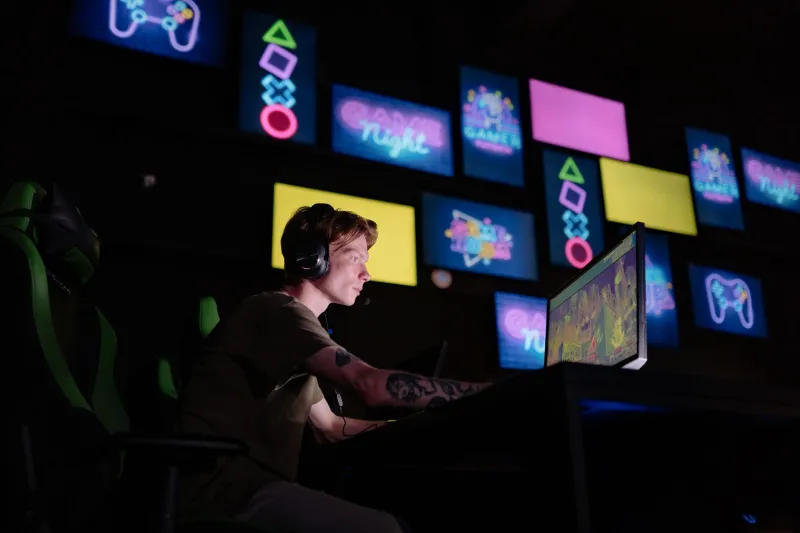
Here's something most people never want to hear: the moment you feel completely locked in, totally in the zone, absolutely unstoppable — that might be exactly when you should close the app and walk away.
Sounds backwards, right? But ask any serious competitive gamer how they sustain performance across long sessions, and almost every one of them will tell you the same thing. The break isn't a weakness. The break is the strategy.
Your Brain Has a Battery — And You're Draining It Without Knowing
Neuroscientists have been studying sustained attention for decades, and the findings are pretty humbling for anyone who's ever bragged about grinding through a five-hour session without stopping. Research out of the University of Illinois found that the brain's ability to stay focused on a single task drops off sharply after about 20 to 30 minutes of uninterrupted effort. After that, you're not really playing at full capacity — you're just playing on fumes and not noticing.
The technical term is "vigilance decrement," and it describes the very real way your brain starts tuning out repetitive input over time. The longer you stay locked onto one thing without a mental reset, the slower your reaction times get, the worse your pattern recognition becomes, and the more likely you are to make decisions you'd never make with fresh eyes.
For casual players, this often shows up as that mysterious cold streak that hits out of nowhere an hour into a session. You were doing great. Then suddenly nothing works. The cards are cold, the opponents seem smarter, the timing feels off. Chances are, nothing actually changed except your brain quietly downshifted without telling you.
What the Pros Actually Do (And Why It Works)
Professional esports athletes — the kind competing for serious prize pools in games like League of Legends, Valorant, and CS2 — treat cognitive endurance with the same respect a marathon runner gives their legs. Their training schedules are built around something called deliberate recovery, which includes structured breaks woven into every practice block.
Many top players follow a rhythm that looks something like this: 45 to 60 minutes of focused play, followed by a 10-to-15 minute complete mental reset. During that reset, they're not scrolling highlights or watching replays. They're doing something genuinely different — stretching, stepping outside, making food, or just sitting quietly. The goal is to give the prefrontal cortex — the part of your brain handling decisions, risk assessment, and impulse control — a real chance to recover before the next block starts.
Some players have talked about an even shorter version of this: micro-breaks of roughly 60 to 90 seconds between individual rounds or matches. Just enough time to breathe, reset posture, and mentally release whatever just happened before the next game loads. It sounds almost too simple to matter. But the compounding effect across a long session is significant.
The Fatigue Trap Most Casual Players Fall Into
Here's the brutal irony of gaming fatigue: it makes you worse at recognizing that you're tired. Studies on decision-making under cognitive load consistently show that as mental fatigue sets in, people become simultaneously less accurate and more overconfident. You start making riskier calls. You start assuming patterns that aren't there. You start chasing losses or doubling down on strategies that stopped working 20 minutes ago.
For casual entertainment players — people who play online games for fun, for competition, or just to unwind after work — this is where sessions go sideways. What started as a relaxing Friday night turns into a frustrating two-hour grind where nothing clicks. And the worst part? Many people respond to that frustration by playing more, convinced the turnaround is just around the corner.
The pros call this "tilt," and avoiding it isn't about willpower. It's about structure.
Building Your Own Break Routine
You don't need a professional coach or a $10,000 training setup to borrow these habits. The principles are simple enough to apply tonight.
Set a session clock, not just a game clock. Before you start playing, decide how long you're going to play total — and build in breaks at the 45-minute mark no matter how things are going. A digital timer works fine. The point is that the decision to break happens before you're in the heat of the moment, when your judgment is still fresh.
Use your break for something genuinely different. Stand up. Get water. Do a lap around the room. The research is clear that passive downtime — sitting and staring at your phone — doesn't give your attention system the same recovery as actually shifting your sensory environment. Even 60 seconds of physical movement makes a measurable difference.
Track how you feel at the start of each session block. Seriously, just a quick mental check-in: energy level, focus, mood. Over time, you'll start to notice patterns in when you play your best and when things tend to fall apart. That self-awareness alone is worth more than most strategy guides.
Give yourself a hard stop after two blocks. Two focused 45-minute sessions with a proper break in between is roughly the window where most casual players can sustain real quality. After that, the returns diminish fast. Logging off at the two-session mark — especially when you're ahead — is one of the most underrated moves in any player's toolkit.
The Counterintuitive Edge
There's a bigger idea underneath all of this that's worth sitting with: the players who win most consistently aren't the ones who play the hardest or the longest. They're the ones who manage their mental resources the smartest.
Taking a break isn't admitting defeat or breaking momentum. It's protecting the thing that creates momentum — a clear, rested, responsive mind that can actually execute on what you know.
The game will still be there in 10 minutes. Your best decision-making might not be, unless you give it a chance to recharge.
So next time you're on a roll and everything feels dialed in — consider that your cue to pause. Not because you're losing. Because you're winning, and you'd like to keep it that way.