Recharge to Dominate: The Hidden Science of Playing Less to Win More
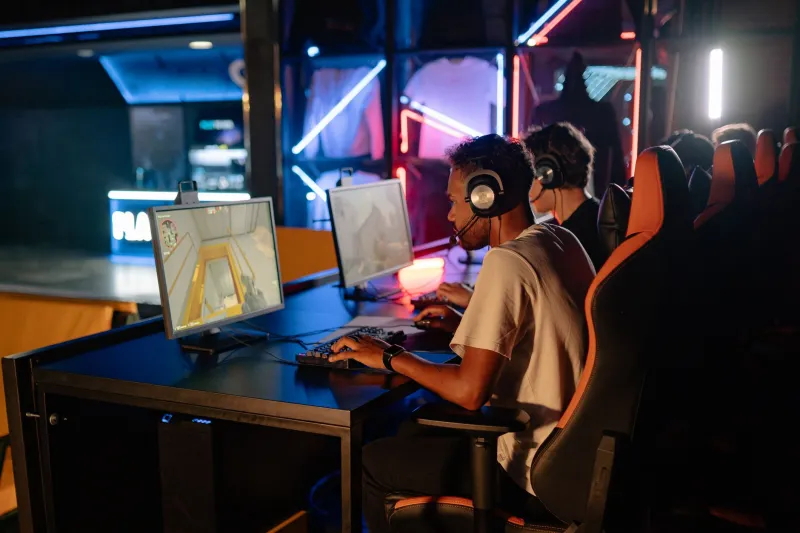
Here's something that sounds completely backward: the players racking up the best results aren't the ones logging the most hours. They're the ones who've figured out exactly when to stop.
It sounds almost too simple. Step away from the screen, come back sharper, outplay everyone who never left. But there's genuine neuroscience underneath this idea, and once you understand it, you'll never look at a gaming session the same way again.
Your Brain on a Losing Streak
When you're deep into a session that's gone sideways — bad calls stacking up, momentum nowhere in sight — something real is happening inside your head. Cortisol, the stress hormone, starts climbing. Your prefrontal cortex, the part of your brain responsible for strategic thinking and impulse control, begins to underperform under that chemical pressure.
Dr. Marcus Webb, a performance coach who works with competitive esports teams across the Pacific Northwest, puts it plainly: "Most players think they're in a slump because of bad luck or bad opponents. What's actually happening is their brain chemistry has shifted. They're making decisions from a stressed, depleted state — and they don't even realize it."
The fix isn't more practice. It's recovery.
Dopamine: The Meter Nobody Watches
Here's where it gets genuinely interesting. Dopamine — the neurotransmitter most people associate with pleasure — is actually more about anticipation than reward. Every win, every near-miss, every exciting moment in a game triggers a dopamine response. And like any system that gets overworked, it needs time to reset.
When you grind session after session without meaningful breaks, your dopamine receptors become desensitized. The excitement that once sharpened your focus starts to flatten out. Decisions that used to feel crisp start feeling foggy. You're not bored — you're chemically depleted.
Research published in the journal Nature Human Behaviour found that deliberate rest periods allow the brain to consolidate learned patterns and restore baseline dopamine sensitivity. Translation: stepping away actually makes the game feel exciting again — and that renewed engagement directly improves decision quality.
Performance coach Alicia Tran, who consults for a gaming organization based in Austin, Texas, describes it this way: "We track our players' session lengths and break schedules the same way a sports team tracks physical conditioning. Mental recovery isn't optional — it's part of the training plan."
The 90-Minute Window
Sports science has long recognized something called the ultradian rhythm — a natural cycle the human body runs through roughly every 90 minutes, cycling between higher and lower states of alertness. Elite athletes have built training blocks around this cycle for decades. Smart gamers are starting to catch on.
The practical application is surprisingly straightforward. Play in focused 60-to-90-minute windows, then step away for at least 20 minutes before the next session. During that break, the goal isn't to scroll social media or watch highlight reels. Physical movement, even a short walk around the block, accelerates the neurochemical reset significantly.
Tran's teams use what she calls "circuit breakers" — mandatory offline periods built into their weekly schedules. "The players who fight us on this are always the ones who come back and say it made the biggest difference," she says. "Nobody wants to believe that doing less is actually doing more."
Building Resilience, Not Just Skill
There's a difference between skill and resilience, and it's a distinction that separates good players from dangerous ones. Skill gets you to a certain level. Resilience — the ability to maintain sharp thinking across multiple sessions, under pressure, after setbacks — is what keeps you there.
Mental resilience in gaming works a lot like physical resilience in athletics. A marathon runner doesn't improve by running marathons every single day. They improve through a structured combination of effort and recovery. The recovery isn't passive — it's where the adaptation actually happens.
Webb explains it through what he calls the "stress-recovery loop." "You apply stress — in this case, focused, challenging gameplay. Then you allow recovery. During that recovery phase, your nervous system adapts upward. Skip the recovery, and you're just accumulating fatigue without the adaptation. You're spinning your wheels."
This is why players who take deliberate breaks often report coming back to a session with noticeably clearer reads on situations, faster pattern recognition, and better emotional regulation when things go wrong.
Practical Protocols Worth Stealing
So what does a smart recovery schedule actually look like in practice? Here are a few approaches that performance coaches recommend:
The 90/20 Split: Play for 90 minutes, break for 20. During the break, move your body — even light stretching counts. Avoid screens if possible.
The End-of-Session Debrief: Before you close out a session, spend five minutes writing down two or three observations about your play. This isn't about beating yourself up — it's about giving your brain something concrete to process during rest. Players who journal briefly after sessions show faster skill consolidation than those who don't.
The Hard Stop: Set a session limit before you start, not after you're already tired. When you're depleted, your judgment about whether to keep going is compromised. Decide when you're fresh.
The Day-Off Rule: At least one full day away from intensive play per week. Not a light session — a genuine break. This is where deeper neurological recovery happens, and skipping it consistently is one of the clearest predictors of performance decline over time.
The Competitive Edge Nobody Talks About
Here's the thing about the gaming community in the US right now: it's more competitive, more engaged, and more serious than it's ever been. Whether you're playing for fun, for community, or for something more, the mental game is increasingly where the real edges live.
Anyone can grind more hours. Not everyone is willing to be strategic about rest. That's precisely why it works — it's the move most players won't make.
The best version of your game isn't hiding inside another three-hour session at midnight. It's waiting on the other side of a proper break, a good night's sleep, and the kind of fresh mental clarity that only comes when you've actually let your brain do its recovery work.
Step away with intention. Come back with an edge. That's not a soft suggestion — it's the strategy.