Couch Coach: The Surprising Science Behind Why Watching Gamers Has Become America's New Obsession
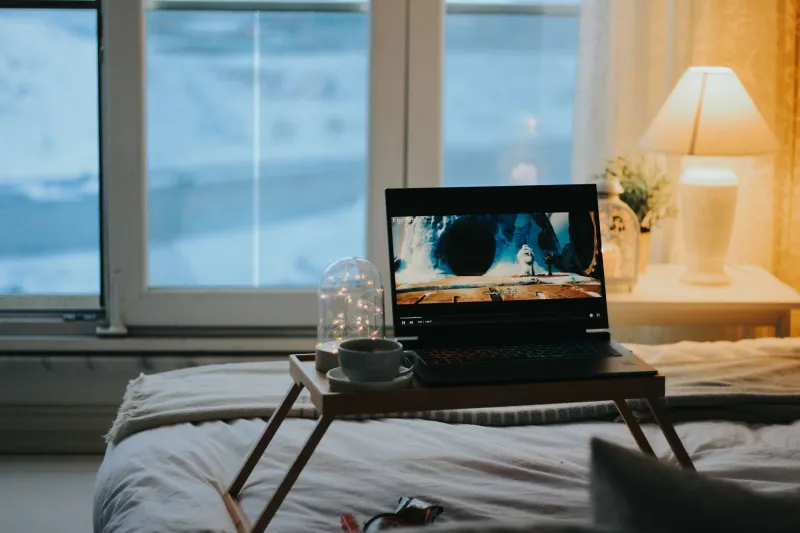
Picture this: It's a Tuesday night. You've got a perfectly good gaming setup sitting right there — controller charged, headset ready, favorite game loaded up. And yet, there you are, three hours deep into a streamer's marathon session, completely glued to someone else's screen. You're not even playing. You're watching someone else play.
And honestly? You're loving every second of it.
If that sounds familiar, you're in massive company. Platforms like Twitch, YouTube Gaming, and TikTok LIVE are pulling in hundreds of millions of viewers every single month — and a huge chunk of those viewers aren't casual players killing time between sessions. They're dedicated spectators who genuinely prefer watching over doing. That shift is real, it's growing, and the psychology behind it is genuinely wild.
Your Brain on Spectatorship
Let's start with the basic neurological truth: your brain doesn't actually care all that much whether you're doing something or watching someone else do it. Mirror neurons — the same neural circuits that fire when you physically perform an action — also activate when you observe that action in someone else. When a streamer pulls off an insane last-second clutch in a battle royale, your nervous system registers a version of that thrill. Not identical, but close enough to matter.
On top of that, there's dopamine — the brain's favorite reward chemical. Gaming is famously good at triggering dopamine loops through wins, level-ups, and unlocks. But here's the twist: watching someone else experience those moments triggers a softer, more sustained dopamine drip. Instead of the sharp spikes and crashes of active play, spectatorship delivers a mellower, more consistent buzz. For a lot of people, that actually feels better. Less stressful. More relaxing.
In other words, watching isn't a lesser version of gaming. For the brain, it's a different experience entirely — and sometimes a more comfortable one.
The Parasocial Pull
The other massive piece of this puzzle is the relationship people build with the streamers themselves. These aren't just random people on a screen. Over months and years of watching, viewers develop what psychologists call parasocial relationships — one-sided emotional bonds that feel surprisingly real and meaningful.
You start to know a streamer's sense of humor. You learn their backstory, their quirks, their go-to strategies. You celebrate when they win a big tournament and feel genuine disappointment when they go on a rough streak. The streamer doesn't know you exist, but that almost doesn't matter. The emotional investment is very real on your end.
This dynamic isn't unique to gaming — fans have always formed parasocial bonds with athletes, musicians, and actors. But streamers have turbocharged it. They talk directly to the camera. They read your chat messages live. They respond to donations and subscriptions by name. The illusion of mutual connection is more convincing than almost anything traditional media has ever produced. And that illusion keeps people coming back, day after day, like checking in on a friend.
The Barrier Has Never Been Lower
There's also a deeply practical reason why spectatorship is winning: it asks almost nothing of you.
Actively gaming requires time, money, hardware, skill, and mental energy. You need to learn mechanics, grind through early levels, deal with matchmaking, and accept the very real possibility of losing badly and feeling frustrated. For a lot of people — especially adults juggling jobs, families, and general life chaos — that's a tall order on a weeknight.
Watching a streamer? You pull up an app on your phone, your tablet, or your TV. You don't need to be good at anything. You don't need to commit to a session length. You can dip in and out, multitask, or just have it running in the background while you eat dinner. The entertainment is there, it's immediate, and the cost of entry is basically zero.
That accessibility gap between playing and watching has widened enormously in the last five years, and it's a huge driver of why spectatorship is growing faster than active gaming in certain demographics.
Community Without the Commitment
Here's something that often gets overlooked: watching streams is a social activity. The chat window on a Twitch stream isn't just noise — it's a live, rolling conversation between thousands of people who share a common interest. Inside jokes develop. Recurring phrases become cultural shorthand. Regular viewers recognize each other and form genuine micro-communities.
For a lot of Americans who feel disconnected from traditional social structures — who don't have a local sports bar, a bowling league, or a tight-knit neighborhood — a streamer's chat room fills a real social gap. It's belonging without obligation. You can participate as much or as little as you want, and you're always welcome back.
That sense of low-stakes community is genuinely hard to find elsewhere, and it's one of the strongest retention mechanisms in the entire streaming ecosystem.
So Is Watching "Enough"?
There's a lingering cultural guilt that some spectators carry around — a nagging feeling that they should be playing, that watching is somehow passive or lazy. But that framing misses the point entirely.
Entertainment isn't a competition. The goal is enjoyment, connection, and mental relaxation — and if watching a streamer delivers all three of those things more effectively than booting up a game yourself, that's not a failure of willpower. That's just knowing what works for you.
At the same time, the best streaming experiences often do something interesting: they make you want to play. A skilled streamer can turn a game you've never touched into something you need to try immediately. The spectatorship and the participation aren't opposites — they feed each other in ways the industry is still figuring out.
What This Means for the Future of Gaming Culture
The rise of gaming spectatorship isn't a threat to gaming. It's an expansion of what gaming culture actually is. The audience has gotten bigger, more diverse, and more layered. There are hardcore players who never watch streams, dedicated spectators who never pick up a controller, and millions of people who move fluidly between both modes depending on the day.
Platforms, developers, and communities that understand this spectrum — and build experiences for all of it — are the ones that will define what gaming looks like over the next decade.
For now, though, it's completely okay to sit back, pull up your favorite streamer, and enjoy the show. Your brain is having a great time either way.
At CaCuoc68, we're all about finding the entertainment style that actually works for you — whether that's playing, watching, strategizing, or just vibing. Stay curious, stay entertained, and play smart.